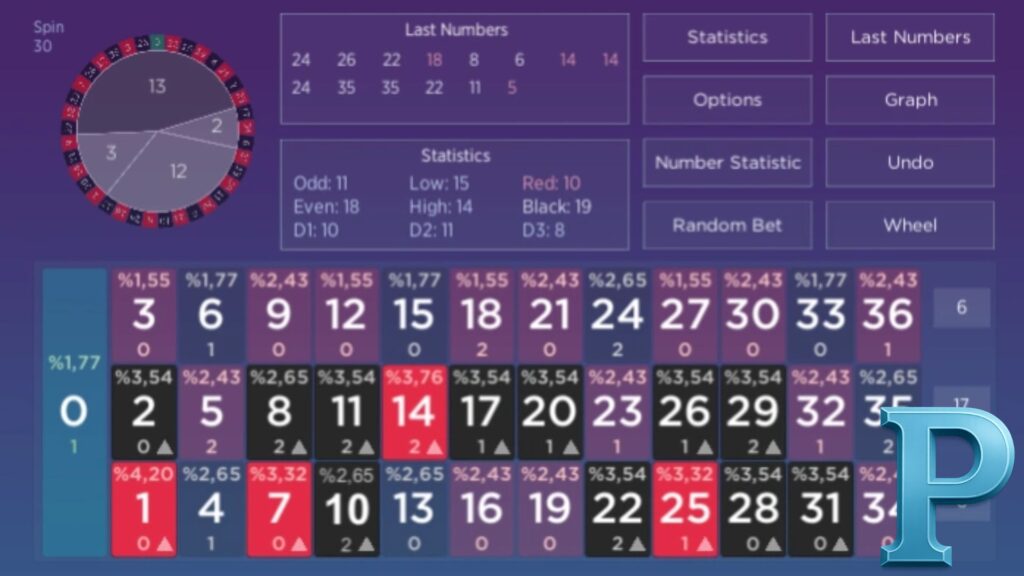
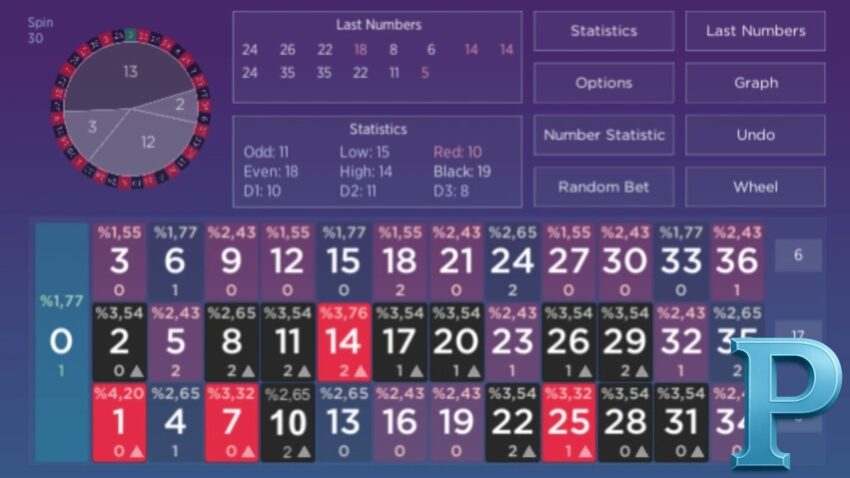
Roulette Color and Number Analysis With a Modern Data Approach
Roulette has always been a game of visual simplicity: red or black, odd or even, high or low, single numbers across a spinning wheel. However, in today’s digital environment, players increasingly apply structured observation and statistical thinking to interpret outcomes. Therefore, roulette color and number analysis now often involves reviewing historical data, variance patterns, and probability distribution instead of relying purely on instinct.
Although the wheel remains governed by randomness, modern platforms provide detailed history logs, visual roadmaps, and session statistics. Consequently, players can observe clustering behavior more clearly than ever before. Nevertheless, it is essential to remember that analysis must remain grounded in mathematical reality rather than assumption slot gacor.
The Mathematical Foundation of Roulette
Most modern platforms operate under the European format with 37 pockets (0–36). In live-streamed environments—often broadcast from cities such as Riga or classic venues like Monte Carlo—the physical structure mirrors traditional casino standards.
From a data perspective, each number has a 1 in 37 probability per spin. Similarly, red and black outcomes each cover 18 numbers, with zero acting as the house advantage. Therefore, the probability of red or black is slightly under 50% per spin.
Importantly, every spin is independent. Thus, previous results do not influence future outcomes, even if short-term sequences appear meaningful.
Color Analysis in a Data Context
Color-based betting (red/black) is often chosen because of its simplicity and relatively low volatility compared to single-number wagers. However, modern roulette color and number analysis examines more than just immediate streaks.
For example, players may review:
- Consecutive red or black runs
- Alternating color sequences
- Frequency distribution over 50–100 spins
- Ratio imbalances within a session
Although short streaks such as five reds in a row may feel significant, data analysis shows that clustering is a natural feature of random systems. In fact, consecutive outcomes occur frequently in independent probability environments.
Therefore, instead of predicting continuation or reversal, disciplined players use color analysis to monitor variance rather than chase it.
Number Distribution and Sector Observation
Beyond color, number-level analysis introduces deeper observation. Digital platforms often allow players to track:
- Hot numbers (frequently appearing)
- Cold numbers (recently absent)
- Dozen distribution (1–12, 13–24, 25–36)
- Column frequency
- Wheel sector clustering
However, a modern data approach treats “hot” and “cold” numbers cautiously. While a number may appear repeatedly within a short sample, statistical independence ensures equal probability on every new spin.
Consequently, observing number clusters should inform awareness—not trigger aggressive wagering.
Variance and Short-Term Clustering
Variance explains why sessions sometimes feel dominated by one color or range. Over 20 spins, for instance, it is entirely possible for red to appear 14 times. Although this may seem extreme, it falls within normal probability fluctuation.
Over larger samples—such as 500 or 1,000 spins—distribution tends to approximate expected ratios more closely. Thus, modern roulette color and number analysis emphasizes sample size awareness.
Short sessions magnify variance. Longer sessions reveal balance more gradually.
Data Tracking Without Overreaction
Modern platforms display historical charts and statistics. While these tools improve transparency, they can also intensify emotional interpretation.
A structured approach involves:
- Reviewing recent spin frequency calmly.
- Avoiding large bet increases based on short streaks.
- Maintaining consistent bet size.
- Setting predefined bankroll limits.
In this way, data becomes informational rather than predictive.
Bankroll Structure as a Statistical Companion
Even with data awareness, roulette maintains a fixed house edge. Therefore, bankroll management remains central to stability.
A rational framework includes:
- Allocating a session budget
- Betting 1–2% per spin
- Defining stop-loss and profit targets
- Avoiding exponential progression systems
Because color bets offer smoother volatility than straight-up numbers, some players prefer combining even-chance wagers with limited number coverage. Nevertheless, exposure per spin should remain controlled.
The Psychological Component of Data Analysis
Although data provides structure, psychology influences interpretation. For example:
- After multiple losses, players may believe reversal is guaranteed.
- After consecutive wins, confidence may rise excessively.
However, disciplined analysis recognizes that probability remains constant. Therefore, emotional neutrality strengthens decision-making.
In modern roulette environments—whether RNG-based or live-streamed—information is abundant. Yet, interpretation must remain rational.
Long-Term Perspective in Modern Play
Ultimately, roulette color and number analysis must align with statistical reality. Over extended samples, distribution approaches expected ratios. However, short sessions may feel imbalanced due to variance.
Thus, stability comes from:
- Accepting randomness
- Controlling exposure
- Using data as context, not certainty
- Maintaining emotional discipline
A modern data approach enhances awareness but does not eliminate house edge.
Conclusion
Roulette color and number analysis with a modern data approach emphasizes probability, variance recognition, and disciplined bankroll control. Although digital tools allow detailed tracking of colors, numbers, and sectors, they should guide structured observation rather than prediction.
Therefore, successful modern roulette play relies less on forecasting outcomes and more on managing risk. By combining statistical understanding with steady decision-making, players transform data from a source of excitement into a tool for stability.
Cek Juga Artikel Gacor Dari Platform : dtomarmaris